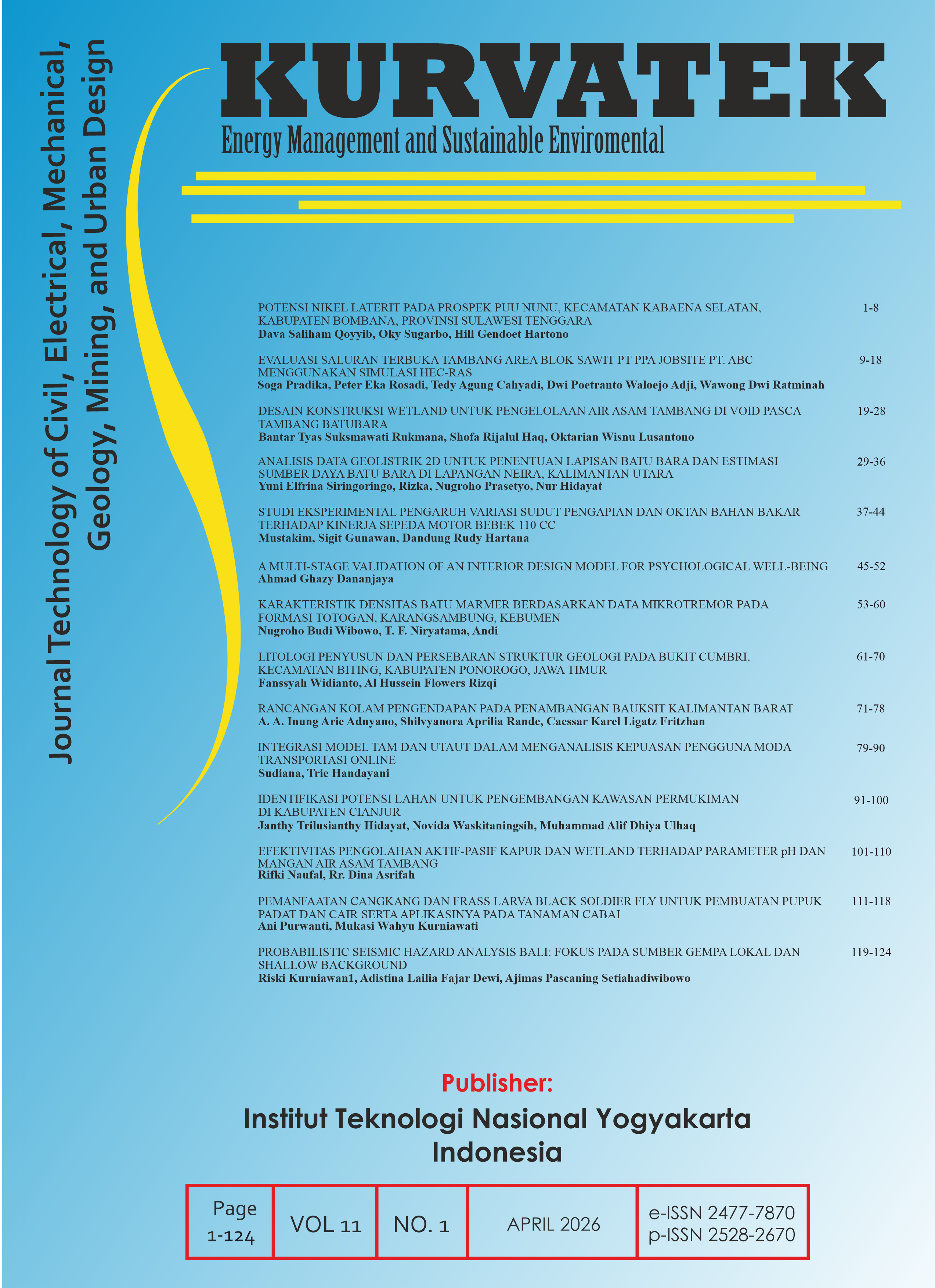
UTILIZATION OF BLACK SOLDIER FLY LARVAL SHELLS AND FRASS FOR THE PRODUCTION OF SOLID AND LIQUID FERTILIZERS AND THEIR APPLICATION TO CHILI CULTIVATION
DOI:
https://doi.org/10.33579/krvtk.v11i1.6529Keywords:
Black Soldier Fly (BSF), Frass fertilizer, Larva shells, Exuviae, ChiliAbstract
This research explores the utilization of Black Soldier Fly (BSF) frass and larval shells (exuviae) as primary materials for producing both solid and liquid organic fertilizers, and assesses their influence on the growth and productivity of chili plants (Capsicum annuum L.). The experiment was carried out under greenhouse conditions using a Completely Randomized Design (CRD) consisting of four treatments: control (P0), NPK fertilizer (P1), solid BSF frass fertilizer (P2), and fermented liquid fertilizer made from BSF frass and larval shells (P3). Observed parameters included plant height, leaf number, fresh fruit weight, and post-harvest soil nitrogen content. Results revealed that the P3 treatment substantially improved plant performance compared to the other treatments, showing an average increase of 61,9% in height and 128% in fruit weight relative to the control (p<0.05). Additionally, soil nitrogen levels rose by 68%, indicating that BSF-based fertilizers enhance nutrient availability and promote soil microbial activity. Overall, the findings demonstrate that integrating BSF frass and larval shells into fertilizer formulations presents an environmentally friendly and effective alternative to conventional chemical fertilizers for sustainable chili cultivation.
Downloads
References
D. Beesigamukama, B. Mochoge, N. K. Korir, K. K. M. Fiaboe, D. Nakimbugwe, F. M. Khamis, S. Subramanian, T. Dubois, M. W. Musyoka, S. Ekesi, S. Kelemu, and C. M. Tanga, “Exploring Black Soldier Fly Frass as Novel Fertilizer for Improved Growth, Yield, and Nitrogen use Efficiency of Maize Under Field Conditions,” Frontiers in Plant Science, vol. 11, no. 574592, pp. 1–10, 2020. doi: 10.3389/fpls.2020.574592
L. Mirabello, A.-M. Dulaurent, C. Roisin, B. Albert, and D. Houben, “Comparative Effects of Black Soldier Fly Frass, Poultry Litter, and NPK Fertilizer on Plant Growth, Soil Microbial Activity and Earthworm Biomass,” Journal of Soil Science and Plant Nutrition, vol. 25, pp. 8231–8240, 2025.
F. R. Sánchez, P. González, and L. Araya, “Black soldier fly frass and its derivatives as biofungicide to control Fusarium wilt in bananas,” Chilean Journal of Agricultural Research, vol. 85, no. 3, pp. 474–482, 2025.
J. Seetharamulu, K. Madhavi, P. J. Raju, D. Thrilekha, and J. Jayashree, “Effect of black soldier fly frass as organic input on the growth of mulberry (Morus alba) and bioassay studies on silkworm (Bombyx mori L.),” International Journal of Research in Agronomy, vol. 7, no. 8, pp. 436–442, 2024.
C. Houben, P. O. Buchmann, and E. Rumpold, “Applications of food waste-derived black soldier fly larval frass as organic fertilizer: A circular economy approach,” Journal of Cleaner Production, vol. 298, art. 126872, 2021.
R. Putra, S. H. Utami, and D. Herlina, “Pengaruh pupuk cair frass Black Soldier Fly terhadap pertumbuhan dan hasil cabai rawit (Capsicum frutescens),” Jurnal Agroteknologi Tropika, vol. 12, no. 2, pp. 87–94, 2024.
A. R. Chowdhury and N. T. Reineke, “Sustainable conversion of agricultural waste through black soldier fly larvae for organic fertilizer and soil health improvement,” Bioresource Technology Reports, vol. 25, art. 101657, 2025.
M. Kumar, A. Brar, and V. Vivekanand, “Bioconversion of chitinous waste into value-added products through microbial fermentation,” Bioresource Technology Reports, vol. 15, 2021.
M. K. Farina, S. L. Schmitt, and C. V. Abugri, “Chitin and chitosan derived from Hermetia illucens pupal exuviae as biostimulant and antimicrobial agents in sustainable agriculture,” Carbohydrate Polymers, vol. 320, art. 121183, 2024.
WUR (Wageningen University & Research), Effects of Black Soldier Fly Frass on Plant and Soil, Wageningen Plant Research Report No. WPR-OT 996, 2023.
F. Hou, J. A. Shah, and Y. Guo, “Influence of insect frass on soil enzymatic activity and nutrient cycling under greenhouse conditions,” Applied Soil Ecology, vol. 188, art. 104981, 2024.
E. A. Müller and R. T. Wang, “Soil microbial responses to black soldier fly frass amendment: A meta-analysis,” Frontiers in Microbiology, vol. 13, art. 945732, 2023.
D. E. Nathanael and P. K. Siregar, “Biofertilizer potential of fermented BSF frass enriched with microbial consortia on vegetable production,” Frontiers in Sustainable Food Systems, vol. 8, art. 102397, 2025.
N. Yudiarini and M. F. Sulit, “Maggot Frass Fertilizer: Effects on Productivity and Economic Efficiency in Organic Vegetable Farming,” Agro Bali: Agricultural Journal, vol. 8, no. 3, pp. 953–961, 2025. doi: 10.37637/ab.v8i3.2453.
H. R. Lukman and M. Sulistyo, “Potensi Residu Black Soldier Fly sebagai Bahan Baku Pupuk Organik dalam Pertanian Berkelanjutan,” Jurnal Pertanian Tropika dan Subtropika Indonesia, vol. 10, no. 3, pp. 155–162, 2023.
Downloads
Published
How to Cite
Issue
Section
License
Copyright (c) 2026 Ani Purwanti, Mukasi Wahyu Kurniawati

This work is licensed under a Creative Commons Attribution-ShareAlike 4.0 International License.
This journal provides immediate open access to its content on the principle that making research freely available to the public supports a greater global exchange of knowledge.
All articles published Open Access will be immediately and permanently free for everyone to read and download. We are continuously working with our author communities to select the best choice of license options, currently being defined for this journal as follows:
• Creative Commons Attribution-ShareAlike (CC BY-SA)

This work is licensed under a Creative Commons Attribution-ShareAlike 4.0 International License.